Photo via Pixabay
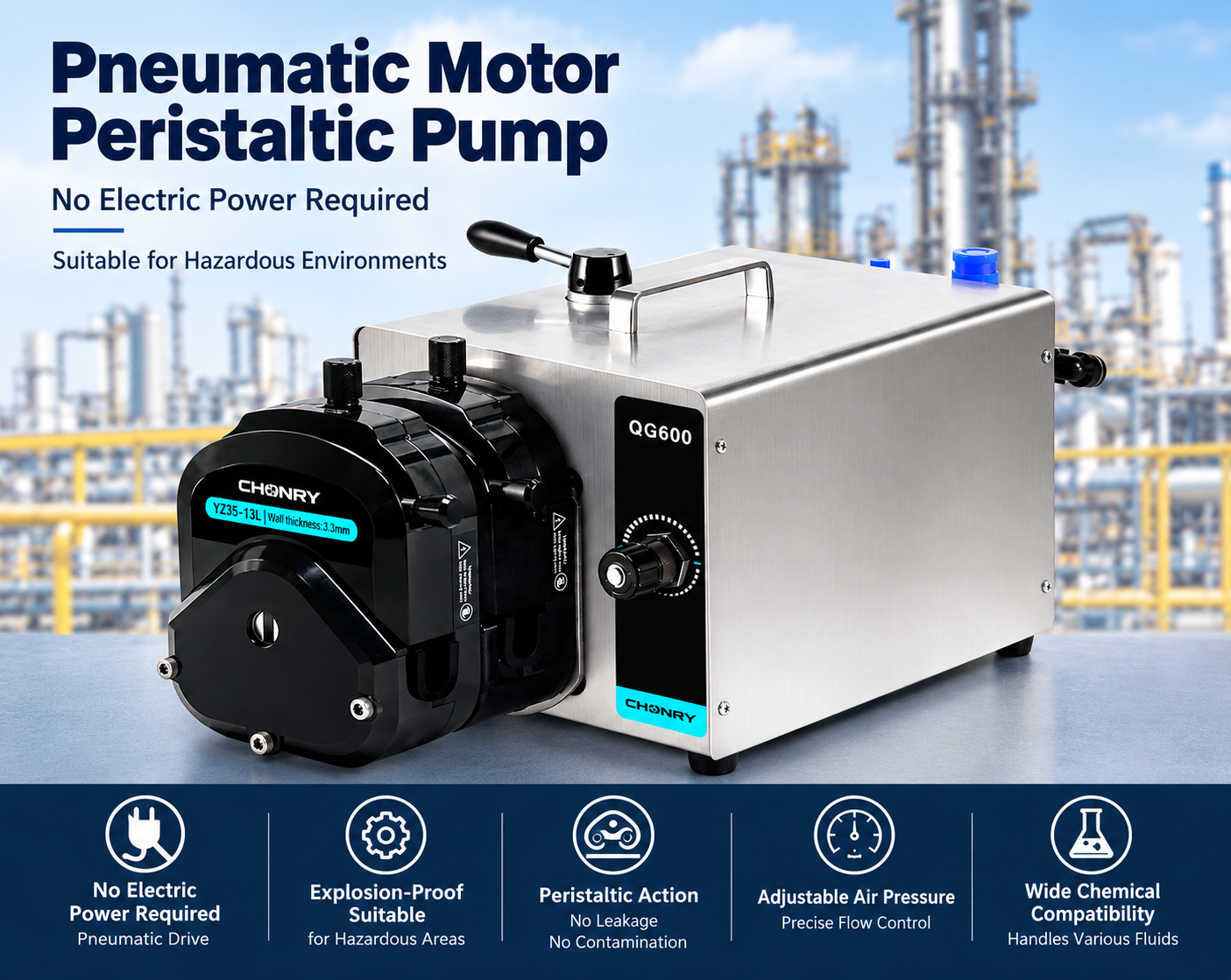
Plants running wash-down areas, corrosive chemicals, or explosive atmospheres often rule out electric pumps before they even compare specs. A pneumatic peristaltic pump solves that problem. It replaces the electric motor with compressed air, so there is no winding, no spark risk, and no seal sitting inside the fluid path.
This guide explains how the pump works, how it compares with an electric drive, where plants actually use it, and what to check before you buy one.
Key Takeaways
A pneumatic peristaltic pump runs on compressed air, not electricity, so it needs no extra wiring or spark rating in wet or hazardous zones.
The global peristaltic pump market is set to grow from $2.59 billion in 2025 to $4.05 billion by 2032, a 6.64% CAGR (Fortune Business Insights, 2026).
Expect dosing accuracy around ±2-5%, looser than electric diaphragm pumps but tight enough for most transfer and dosing duties.
Tube material, flow range, and air consumption narrow down product choices faster than comparing brand names.
In 2026, Fortune Business Insights valued the global peristaltic pump market at $2.59 billion, climbing toward $4.05 billion by 2032 (Fortune Business Insights, "Peristaltic Pump Market Size, Share | Growth Report [2032]", 2026). A pneumatic peristaltic pump moves fluid by compressing a flexible tube with air-driven rollers or shoes, pushing the liquid forward without it ever touching a seal, valve, or motor shaft.
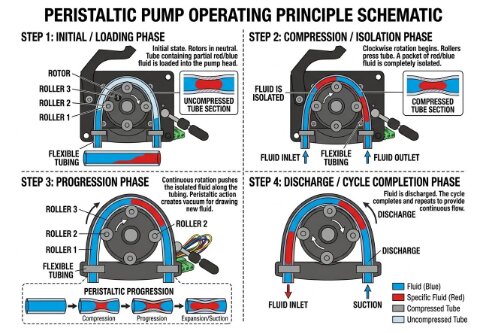
The pump housing holds a looped section of tubing against a rotor or an oscillating shoe assembly. A small air motor or air cylinder drives that rotor, so the pump only needs a compressed air line instead of an electrical supply. As a roller passes over the tube, it pinches the tube shut and pushes the trapped fluid forward, creating a vacuum behind it that pulls in the next slug of liquid.
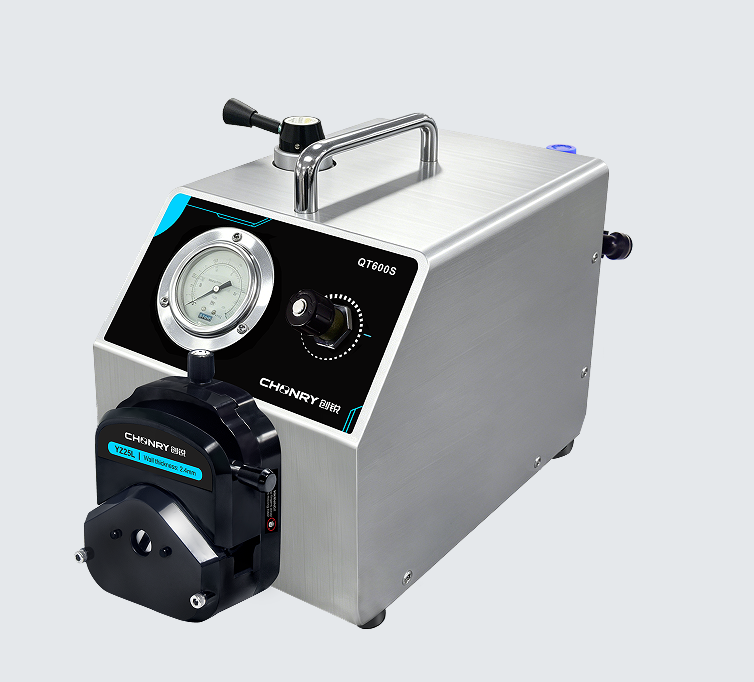
Many engineers assume "pneumatic" and "peristaltic" describe two separate pump families. In practice, the terms describe two different parts of one machine. The tube-and-roller mechanism is the peristaltic action, and the air motor is simply the power source driving it, standing in for an electric motor and gearbox.
Why it matters: Because only the tube touches the process fluid, operators can swap chemical-resistant tubing instead of overhauling the whole pump. That keeps chemical changeovers fast and leaves the compressed air supply as the only utility connection the pump needs.
Typical Flow and Pressure Range
Most pneumatic peristaltic pumps cover a working range from well under 1 GPM up to roughly 50-60 GPM, depending on tube bore and rotor speed. Discharge pressure usually tops out between 100 and 125 PSI, since pushing higher than that starts to shorten tube life quickly. Suppliers publish a pump curve for each tube size, so the right model comes from matching that curve to your process flow and pressure, not from picking the largest pump available.
Air consumption scales with both flow rate and discharge pressure, so two pumps rated for the same GPM can draw noticeably different amounts of compressed air if one runs against higher back-pressure. Asking a supplier for air consumption figures at your actual operating pressure, not just at a standard test condition, avoids a mismatch once the pump is installed.
How Does a Pneumatic Drive Compare With an Electric Motor?
Peristaltic pumps typically dose within ±2-5% accuracy, compared with roughly ±1-2% for electric diaphragm pumps (pcspl.au, "Peristaltic vs Diaphragm Dosing Pumps: Which One Wins?", 2026). A pneumatic drive gives up some of that precision in exchange for a motor-free design that runs safely in wet, submerged, or explosive environments where an electric unit would need extra certification.
An electric peristaltic or diaphragm pump needs a motor controller, wiring, and often a variable frequency drive to adjust flow. A pneumatic version adjusts flow by changing air pressure through a simple regulator, so operators tune output without touching an electrical panel. It also has no minimum voltage or frequency requirement, so it keeps running during a power outage as long as compressed air is available.
Pneumatic drives do use more energy per unit of fluid moved than a well-tuned electric motor, since compressing air wastes energy as heat. Plants that already run a compressed air network for other equipment rarely notice the extra draw. A site adding compressed air only for one small pump, however, often finds the running cost higher than expected.
No motor, wiring, or variable frequency drive to install or maintain
Infinitely variable speed through simple air pressure regulation
Stalls safely under blockage instead of burning out a winding
Higher air energy consumption than an equivalent electric motor
Where Are Pneumatic Peristaltic Pumps Used in Industry?
The peristaltic pump market is expanding at a 3.9% compound annual growth rate as plants adopt it for dosing, metering, and sludge transfer (MarketsandMarkets, "Peristaltic Pumps Market 2025-2030", 2026). Pneumatic versions specifically serve wash-down food plants, mining sites, and hazardous-area chemical processing, anywhere a motor-free design removes a safety or hygiene risk.
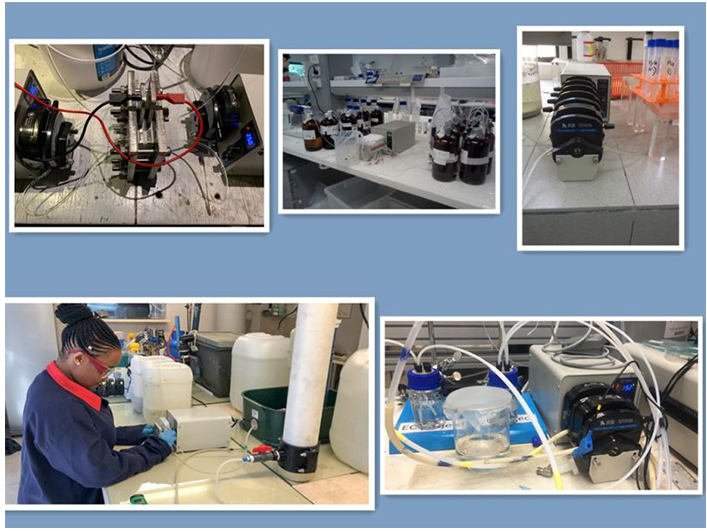
In food and beverage plants, pneumatic peristaltic pumps move syrups, slurries, and cleaning chemicals where frequent hose-down cycles would damage an exposed electric motor. In water and wastewater treatment, they dose polymers and coagulants, viscous or abrasive chemicals that would wear out a diaphragm or gear pump quickly.
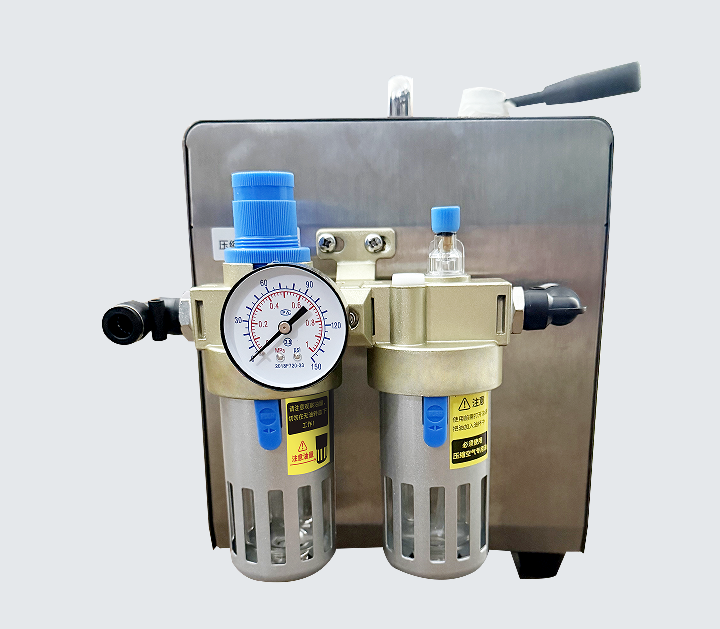
In oil, gas, and chemical plants, the absence of a spark-capable motor lets operators place the pump directly in classified hazardous zones without a separate explosion-proof electrical enclosure. Mining and quarry operations rely on the same pumps for abrasive slurry transfer, since the flexible tube resists wear from suspended solids better than a metal pump housing.
Pharmaceutical and cosmetic manufacturers choose pneumatic peristaltic pumps for sanitary transfer of viscous creams and gels. Across supplier catalogs in these sectors, viscous or abrasive duties such as slurry, sludge, and polymer dosing consistently account for more listed pneumatic peristaltic pump models than clean-water transfer applications, since the pump's tube-only wetted path is most valuable when the fluid itself is harsh.
Construction and concrete producers use the same pump style to dose admixtures and coloring agents into batch mixers, where cement dust and abrasive aggregate would quickly damage an exposed electric motor. Textile and dye houses rely on it for metering reactive dyes and sizing chemicals, since accurate tube replacement keeps color-matching consistent between batches without exposing the motor to steam or wash-down spray.
What Should You Check Before Buying a Pneumatic Peristaltic Pump?
Flow range, tube material, and air consumption eliminate most unsuitable pump models before price even enters the conversation. A pump rated for 5 GPM at 80 PSI air supply will not match a process needing 50 GPM, no matter how competitive its price looks on a spec sheet.
Flow and pressure range: Match the pump's rated flow and discharge pressure to your process, with headroom for future capacity increases.
Tube material: Confirm chemical compatibility with silicone, EPDM, Santoprene, or specialty elastomers rated for your specific fluid and temperature.
Air supply requirements: Check the compressed air volume and pressure the pump needs; an undersized compressor will starve the pump and cut flow.
Certification needs: Verify ATEX, FDA, or 3-A sanitary certification if the pump runs in a hazardous, food-grade, or pharmaceutical environment.
Duty cycle: Continuous dosing wears tubing faster than intermittent transfer, so ask suppliers for expected tube life under your actual run time.
Many buyers compare sticker price first, but a pump mismatched to compressed air capacity creates a hidden operating cost. An undersized air line forces the plant compressor to run harder, which raises energy use more over time than the price gap between two competing pump models.
Ask any shortlisted supplier for three things beyond the spec sheet: a sample tube in your actual fluid for a compatibility test, documented lead time on replacement tubes, and a reference customer running a similar duty cycle. A supplier that cannot produce any of the three is a weaker bet than one with a slightly higher list price but faster parts availability.
How Do You Maintain a Pneumatic Peristaltic Pump?
As the peristaltic pump market grows toward $4.05 billion by 2032 (Fortune Business Insights, 2026), manufacturers increasingly ship tube-wear indicators and quick-release covers to cut inspection time. In a pneumatic peristaltic pump, the tube is the only wearing part, since the rollers and air motor never touch the process fluid.
Inspect the tube visually through the pump's viewing window on a fixed schedule, watching for thinning, cracking, or discoloration. Replace the tube before it ruptures. A scheduled swap costs far less downtime than an unplanned leak mid-shift.Drain and filter the compressed air supply, because moisture or oil carryover in the air line accelerates wear on the air motor's internal seals. Lubricate rotor bearings and gearbox on the manufacturer's interval, and keep spare tubing and seal kits on hand so a changeover takes minutes rather than a full shift.
Plants that log tube hours alongside flow rate, instead of calendar time alone, tend to catch wear before it causes an unplanned stop. A pump running near its maximum rated flow wears tubing faster than one running at half capacity.
Frequently Asked Questions
How much does a pneumatic peristaltic pump cost?
Prices range from a few hundred dollars for small lab-style units to several thousand for high-flow industrial models. Budget scales with tube bore size, air consumption, and certification needs. The market's climb toward $4.05 billion by 2032 (Fortune Business Insights, 2026) reflects rising demand across all of these price tiers.
What is the difference between a pneumatic peristaltic pump and a diaphragm pump?
A peristaltic pump squeezes a flexible tube, so fluid never touches a moving part, while a diaphragm pump pushes fluid through valves and a flexing membrane. Peristaltic designs typically dose within ±2-5% accuracy versus ±1-2% for diaphragm pumps (pcspl.au, 2026), trading some precision for simpler, valve-free maintenance.
Can a pneumatic peristaltic pump run dry without damage?
Yes. Because the tube is the only wetted part and air pressure drives the rollers or shoes, these pumps tolerate dry-running and self-prime without seal damage. This trait fits wastewater and sludge transfer, a segment contributing to the market's 3.9% projected CAGR through 2030 (MarketsandMarkets, 2026).
Is a pneumatic peristaltic pump safe for hazardous or explosive areas?
Yes, when the specific model carries certification for that zone. ATEX classification defines distinct gas zones (0, 1, 2) and dust zones (20, 21, 22), and manufacturers including ARO and Tapflo certify pneumatic pumps for Zone 0/20 and Zone 1 duty (ARO Fluid Handling, Tapflo, 2026), avoiding the extra wiring an electric unit would need.
The Bottom Line
A pneumatic peristaltic pump solves a specific problem: moving fluid safely where an electric motor is inconvenient, risky, or outright prohibited. It trades a small amount of dosing precision for a simpler, motor-free design that tolerates wash-down, dry-running, and classified hazardous areas without extra electrical certification.
With the global market climbing toward $4.05 billion by 2032 (Fortune Business Insights, 2026), more plants are finding this trade-off worthwhile across food, water treatment, mining, and chemical processing. Before choosing a model, confirm flow range, tube compatibility, air supply capacity, and certification needs. Those four checks rule out the wrong pump faster than comparing brand names, and once the tube and flow range are set, the pump itself needs little beyond a fixed inspection schedule to keep running.
ReferencesFortune Business Insights — "Peristaltic Pump Market Size, Share | Growth Report [2032]", retrieved 2026-10-28, https://www.fortunebusinessinsights.com/peristaltic-pump-market-111065
MarketsandMarkets — "Peristaltic Pumps Market 2025-2030", retrieved 2026-10-28, https://www.marketsandmarkets.com/Market-Reports/peristaltic-pump-market-194304410.html
pcspl.au — "Peristaltic vs Diaphragm Dosing Pumps: Which One Wins?", retrieved 2026-10-28, https://pcspl.au/peristaltic-vs-diaphragm-dosing-pump/
ARO Fluid Handling — "ATEX Zone 0 / 20 Diaphragm Pumps", retrieved 2026-10-28, https://www.arozone.com/en/pneumatic-diaphragm-pumps/specialty/atex-zone-0-diaphragm-pumps/
Tapflo — "Diaphragm pumps in explosion-proof design", retrieved 2026-10-28, https://tapflo.com/en/product/diaphragm-pumps-made-of-plastic-for-atex-zones/