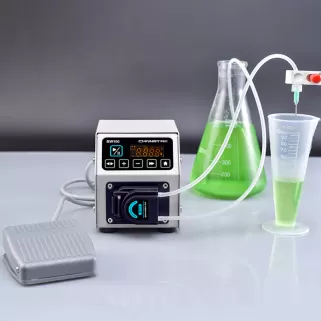
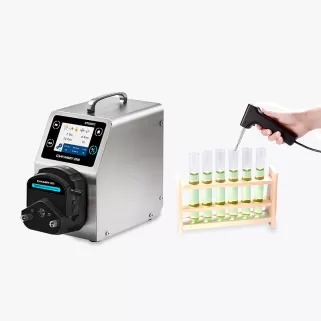
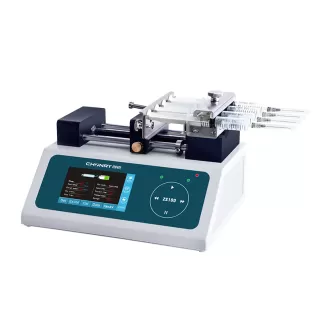
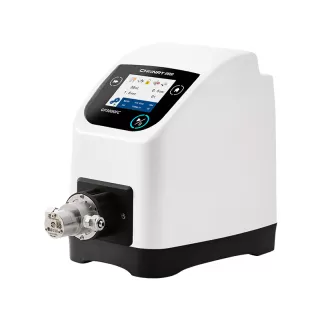
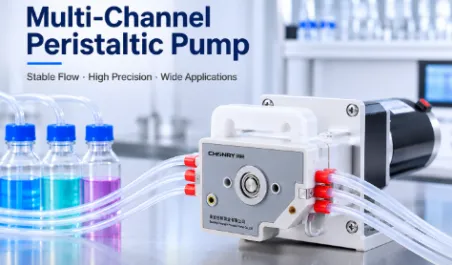
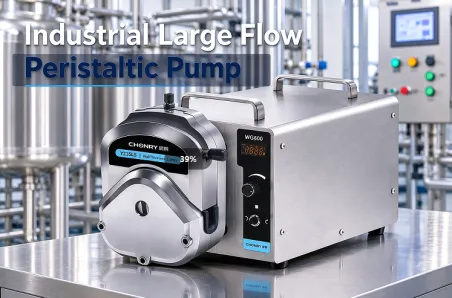
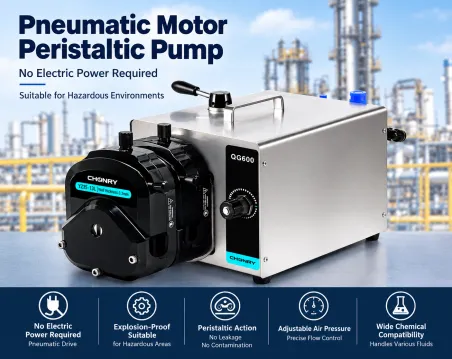
A multi-channel peristaltic pump transfers multiple liquid streams through separate tubing channels using one pumping system. It suits applications that require simultaneous liquid transfer, dosing, or dispensing.
Compared with single-channel pumps, multi-channel systems can simplify equipment integration and reduce the need for multiple pumping units.
When choosing a multi-channel peristaltic pump, buyers should consider channel quantity, flow rate, control method, tubing compatibility, and operating conditions.
What Is a Multi-Channel Peristaltic Pump?
A multi-channel peristaltic pump uses multiple tubing paths to transfer liquids simultaneously.
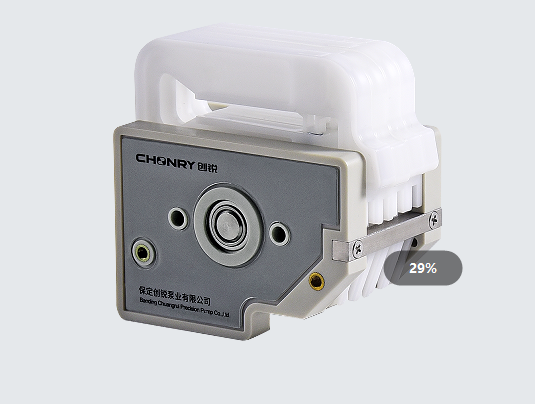
Its working principle is similar to a conventional peristaltic pump. Rollers compress flexible tubing, pushing liquid toward the outlet as they rotate.
Because the liquid remains inside the tubing, it does not normally contact the pump's mechanical components.
How Does It Work?
Liquid enters the tubing.
Rollers compress the tubing.
The moving rollers push liquid forward.
The tubing recovers after compression.
The pumping process repeats continuously.
Each channel provides a separate liquid transfer path.
Multi-Channel vs. Single-Channel Pumps
| Feature | Single-Channel Pump | Multi-Channel Pump |
|---|
| Liquid paths | One | Multiple |
| Pumping arrangement | Individual channel | Multiple channels |
| Installation | Separate units for multiple streams | Integrated pumping configuration |
| Flow control | Depends on drive design | Synchronized or independent, depending on model |
| Applications | Single-liquid transfer | Multiple-liquid transfer |
A multi-channel pump is useful when several liquid streams need to operate simultaneously.
How Many Channels Can a Peristaltic Pump Have?
Multi-channel peristaltic pumps are available in different configurations depending on pump head design.
Common configurations include:
Dual-channel: Two separate liquid paths.
Four-channel: Four simultaneous pumping paths.
Higher-channel configurations: Designed for specialized dispensing and dosing applications.
The available channel count depends on the manufacturer's product range.
Independent vs. Synchronized Flow Control
Not all multi-channel pumps support independent flow adjustment.
Synchronized control: All channels operate together, and their pumping speeds are adjusted simultaneously.
1. Flow Consistency Between Channels
Even when channels operate at the same speed, their actual flow rates may differ.
Factors include:
Tubing inner diameter and wall thickness.
Tubing material and elasticity.
Pump speed and compression.
Fluid viscosity.
Installation conditions.
For applications requiring accurate liquid distribution, request channel-to-channel flow test data.
2. Pump Head and Tubing Compatibility
Check the number of supported channels, tubing dimensions, installation space, and replacement requirements.
Tubing material must also be compatible with the transferred liquid.
Common selection considerations include chemical resistance, temperature resistance, flexibility, and expected service life.
3. Motor and Control Requirements
Confirm the following specifications:
Supply voltage.
Motor speed and torque.
Speed adjustment method.
External control requirements.
Electrical connections.
For OEM equipment, ensure the pump can integrate with the existing electrical and mechanical design.
4. Operating Conditions
Before selecting a pump, confirm the required pressure, fluid temperature, operating duration, and maintenance conditions.
The pump must be suitable for the actual application rather than selected solely by its maximum flow rate.
Multi-Channel vs. Multiple Single-Channel Pumps
Should you choose one multi-channel pump or several single-channel pumps?
| Consideration | Multi-Channel Pump | Multiple Single-Channel Pumps |
|---|
| Installation | Integrated arrangement | Separate units |
| Space requirements | May reduce installation space | May require more space |
| Drive system | May share one drive | Separate drives |
| Flow adjustment | Depends on model | Individual adjustment possible |
| Maintenance | Shared components may affect multiple channels | Individual units can be serviced separately |
Choose a multi-channel pump when several liquid streams can operate together under compatible conditions.
Choose separate pumps when each liquid requires different flow rates, operating schedules, or independent control.
Applications of Multi-Channel Peristaltic Pumps
Multi-channel peristaltic pumps are suitable for various liquid handling applications.
Laboratory and Research
Used for transferring multiple liquid streams in laboratory equipment and research systems.
OEM Equipment Integration
Integrated into automated equipment requiring multiple liquid transfer paths.
Chemical Dosing and Water Treatment
Used for transferring compatible chemicals through separate dosing lines.
Liquid Dispensing Systems
Applied in equipment requiring simultaneous liquid dispensing through multiple outlets.
The appropriate configuration depends on fluid properties, required flow rates, and control requirements.
How to Select the Right Multi-Channel Peristaltic Pump
Follow these five steps when evaluating a pump:
Determine channel quantity: Identify how many separate liquid paths are required.
Define flow rate: Specify the required flow rate for each channel.
Select tubing: Confirm tubing dimensions and chemical compatibility.
Check control requirements: Decide whether synchronized or independent adjustment is needed.
Verify performance: Evaluate flow rate and channel consistency under actual operating conditions.
Providing these details to the manufacturer can help shorten the selection and quotation process.
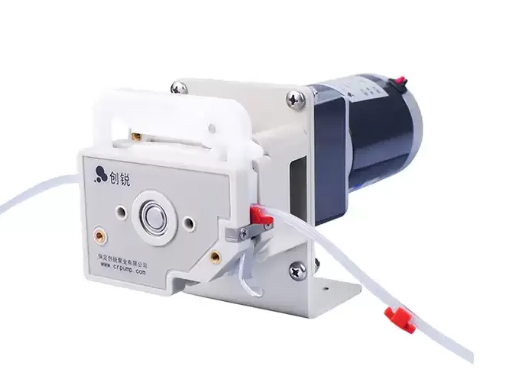
OEM212 Four-Channel Peristaltic Pump from Chonry
CRPUMP offers the OEM212 four-channel peristaltic pump for applications requiring simultaneous liquid transfer through four separate tubing paths.
Its main feature is synchronized operation, making it suitable for equipment that does not require independent flow adjustment for each channel.
OEM212 Technical Specifications
| Specification | OEM212 |
|---|
| Pump type | Multi-channel peristaltic pump |
| Number of channels | 4 |
| Maximum flow rate | 36 mL/min per channel |
| Flow adjustment | Synchronized |
| Independent channel control | Not supported |
| Power supply | 12V / 24V [NEEDS VERIFICATION] |
The maximum stated flow rate is 36 mL/min per channel. Actual performance depends on tubing specifications and operating conditions.
CRPUMP currently has no verified channel-to-channel flow consistency test data for this model.
Is OEM212 Suitable for Your Application?
The OEM212 is worth considering if your application requires:
Four separate pumping channels.
Simultaneous liquid transfer.
Synchronized flow adjustment.
A maximum stated flow rate of up to 36 mL/min per channel.
OEM equipment integration.
It may not be suitable for applications requiring independent flow adjustment for each channel.
Contact Chonry to confirm the product configuration and operating requirements before ordering.
Frequently Asked Questions
Can One Peristaltic Pump Drive Multiple Tubing Channels?
Yes. Multi-channel pump heads can support multiple tubing paths within one pumping system.
Do All Channels Deliver the Same Flow Rate?
Not necessarily. Actual flow rates can vary due to tubing dimensions, material properties, and operating conditions.
Can Each Channel Be Controlled Independently?
It depends on the pump design. The CRPUMP OEM212 uses synchronized flow adjustment and does not support independent channel control.
Can Different Liquids Be Pumped Simultaneously?
Yes, provided each liquid has a separate tubing path and the tubing material is chemically compatible.
How Often Should Pump Tubing Be Replaced?
Replacement frequency depends on tubing material, operating conditions, pump speed, and fluid characteristics. Follow the tubing manufacturer's recommendations and inspect tubing regularly.
Request a Multi-Channel Peristaltic Pump Solution
Looking for a reliable multi-channel peristaltic pump for your equipment or liquid handling project?
CRPUMP provides peristaltic pump solutions for OEM applications.
When requesting a quotation, please provide:
Contact CRPUMP to discuss your application and find a suitable multi-channel peristaltic pump solution.