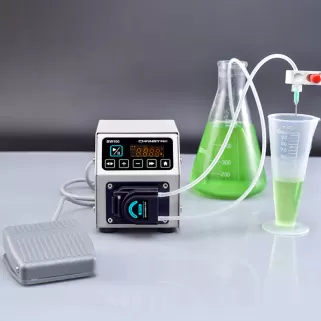
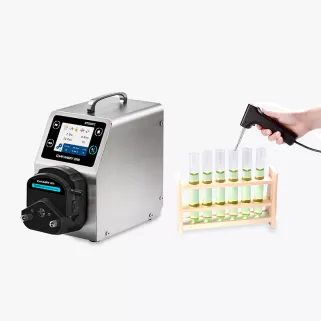
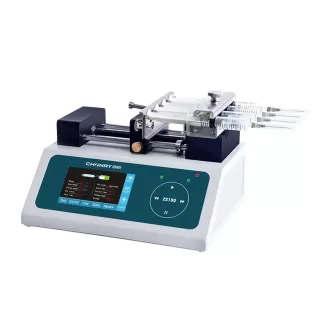
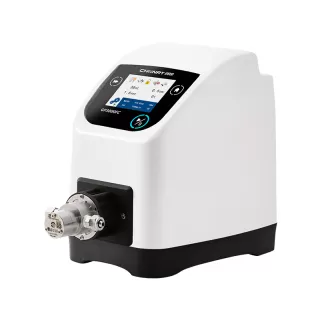
When precision, sterility, and gentle fluid handling are non-negotiable, a laboratory peristaltic pump is the gold standard. From dosing reagents to circulating cell cultures, this versatile pump has become essential equipment in modern labs across biotech, pharma, and chemical research.
If you are looking for a reliable, contamination-free solution for your lab, understanding how a laboratory peristaltic pump works is the first step to making the right choice.
What Is a Laboratory Peristaltic Pump?
A laboratory peristaltic pump is a type of positive displacement pump designed for precise and contamination-free fluid transfer in a laboratory environment. Unlike other pumps, the fluid only contacts the inner wall of the tubing, never the pump mechanism itself.
This design makes the lab peristaltic pump ideal for handling sterile, corrosive, viscous, or shear-sensitive fluids.
The pump consists of three main parts:
1. Roller/ Shoe: Compresses the tubing.
2. Flexible Tubing: The only part that contacts the liquid.
3. Housing / Rotor: Drives the rollers.
How Does a Laboratory Peristaltic Pump Work?
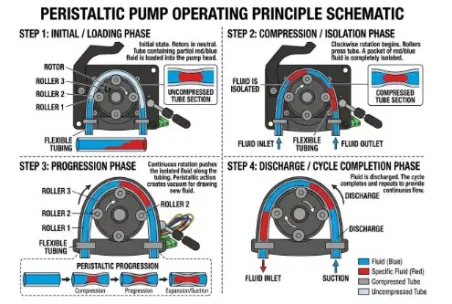
The working principle is inspired by human peristalsis. It is simple yet highly effective:
A rotor with rollers rotates inside the pump housing.
As the rotor turns, the rollers compress a section of flexible tubing.
This compression creates a seal and pushes the fluid forward.
When the tubing returns to its original shape after the roller passes, it creates a vacuum that continuously draws in more fluid.
This gentle pumping action results in low shear, which is critical for handling live cells, proteins, and other sensitive biological materials.
5 Key Benefits of Using a Peristaltic Pump for the Laboratory
Why do top labs choose a peristaltic pump over syringe or diaphragm pumps?
1. Zero Contamination & High Sterility: Since fluid only touches the disposable tubing, there is no risk of cross-contamination between the pump and the fluid. You can simply replace the tubing for a sterile fluid path.
2. Exceptional Precision and Accuracy: A precision peristaltic pump can achieve dosing accuracy of ±0.5%. This is vital for applications like media dispensing, titration, and reagent dosing.
3. Gentle, Low-Shear Handling: The soft squeezing action does not damage fragile cells, blood, or long-chain polymers, unlike gear pumps that produce high shear force.
4. Easy Maintenance and Low Cost: No valves, seals, or impellers to clean or replace. Maintenance is as simple as changing the tubing, which drastically reduces downtime and operating costs.
5. Ability to Handle Complex Fluids: It can easily pump viscous fluids, fluids with suspended particles, and corrosive chemicals by simply choosing the right tubing material, such as PharMed, Silicone, or Viton.
Types of Laboratory Peristaltic Pumps
Choosing the right type depends on your flow rate and precision requirements:
Low-Flow / Micro-Flow Lab Peristaltic Pump: Flow rate from µL/min to mL/min. Perfect for microfluidics, cell culture feeding, and precise dosing.
Medium & High-Flow Lab Pump: Flow rate up to several L/min. Used for media transfer, bioreactor feeding, and general lab liquid handling.
2. By Control Method
Basic Variable-Speed Pump: Manual control via knob. Cost-effective for simple transfer tasks.
Programmable Dispensing Pump: Allows you to set dispensing volume, time, intervals, and copy mode. Essential for automated lab workflows.
Intelligent Laboratory Peristaltic Pump with 4-20mA / RS485: Can be integrated into PLC or automated lab systems for Industry 4.0 labs.
Common Applications of Laboratory Peristaltic Pump
The versatility of this pump makes it indispensable:
Biotechnology & Cell Culture: Feeding bioreactors, harvesting cells, and circulating culture media without contamination.
Pharmaceutical R&D: Precise drug formulation, sterile filling, and dissolution testing.
Chemical Laboratories: Dosing corrosive acids, alkalis, and solvents safely.
Analytical Instruments: Used as a sampling pump for HPLC, ICP-MS, and other analyzers.
Environmental Labs: Water sample collection and chemical dosing in water quality analysis.
How to Choose the Best Laboratory Peristaltic Pump? [Buyer's Checklist]
Don't just look at price. Use this 5-point checklist to select the right model:
1. Flow Rate & Accuracy Requirement: Determine your required flow range. Do you need µL/min precision or L/min transfer? Check the accuracy specification.
2. Number of Channels: Do you need a single-channel pump for one fluid, or a multi-channel peristaltic pump for handling multiple fluids simultaneously?
3. Tubing Material Compatibility: This is critical.
Silicone: Good for general bio-lab use.
PharMed BPT / Tygon: Long lifespan, ideal for cell culture.
Viton / Norprene: Excellent chemical resistance for corrosive fluids.
4. Control & Features: Do you need a simple foot-switch dispensing function, or programmable timed dispensing and an external control interface?
5. Pump Head & Motor Quality: Look for a pump head that allows quick tubing changes and a brushless motor for long life and low noise in a quiet lab environment.
Pro Tip: Always choose a pump with a slightly higher flow rate than you currently need to extend the tubing lifespan by running at a lower RPM.
Maintenance Tips to Extend Tubing Life
Use the largest tubing diameter possible at the lowest RPM to achieve your flow rate.
Regularly clean the pump rollers and housing to prevent chemical corrosion.
Do not run the pump dry for long periods when using thick-walled tubing.
Replace tubing before it fails to ensure accuracy and prevent lab accidents.
Conclusion: Is a Laboratory Peristaltic Pump Right for You?
If your work demands sterile, accurate, and gentle fluid handling with minimal maintenance, a laboratory peristaltic pump is undoubtedly the best investment. Its unique contamination-free design solves the most common challenges in modern laboratory liquid handling.
Ready to upgrade your lab's efficiency? Please let our engineers know your requirements so they can select the right peristaltic pump for you.
FAQ Section
Q1: Why is a peristaltic pump ideal for the laboratory?
A: Because the fluid only contacts the disposable tubing, it guarantees zero cross-contamination, easy sterilization, and precise, low-shear handling of sensitive fluids, which is essential for laboratory work.
Q2: What is the difference between a laboratory peristaltic pump and a syringe pump?
A: A syringe pump offers higher precision for very small, intermittent volumes, while a laboratory peristaltic pump can provide continuous flow, handle larger volumes, and is better for sterile, contamination-free operation with easy tubing replacement.
Q3: How accurate is a lab peristaltic pump?
A: A high-quality precision peristaltic pump can achieve an accuracy of ±0.5% to ±2%, depending on the motor type, tubing condition, and calibration.
"Reviewed by [Shirley], 10+ years in fluid handling solutions"。