In the pharmaceutical and nutraceutical manufacturing sectors, the tablet coating process is a critical final stage that ensures product stability, controlled release, and patient compliance.
As global regulatory standards like the FDA’s Current Good Manufacturing Practice (cGMP) become more stringent, the demand for high-precision liquid delivery systems has intensified.
The peristaltic pump has emerged as the industry standard for feeding coating suspensions into spray systems, replacing older centrifugal or gear pump technologies due to its unique
contamination-free design and volumetric accuracy.
Understanding the Mechanism: Efficiency through Isolation
The core value of a peristaltic pump lies in its "infinite tube" principle. Unlike other pumps where the fluid contacts internal rotors, vanes, or seals, the coating liquid in a peristaltic system
remains entirely contained within a flexible, medical-grade tube.
How it works in a coating environment:A rotating roller assembly compresses the tubing, creating a vacuum that draws the coating suspension forward. This "occlusion" moves the fluid
in discrete "pillows," providing a consistent flow rate to the spray nozzles. Because the fluid never touches the pump hardware, the risk of cross-contamination—a primary concern in B2B
pharmaceutical production—is virtually eliminated.
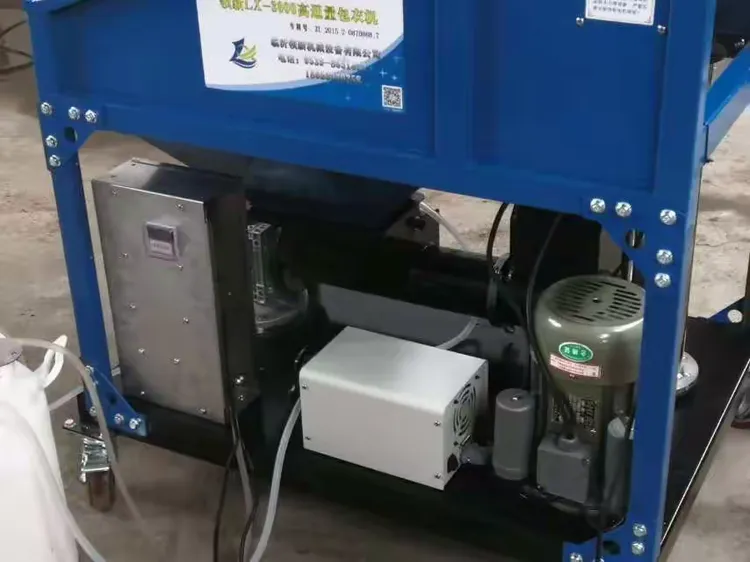
Technical Specifications and Material Integrity
For engineers and production managers, selecting the right pump configuration involves balancing mechanical durability with chemical compatibility.
Tubing Materials: The interface between the pump and the suspension is the most critical component. Modern coating lines typically utilize platinum-cured silicone or thermoplastic
elastomers (TPE). These materials offer high fatigue resistance to withstand millions of occlusions and are compliant with USP Class VI standards.
Precision Control: Advanced pumps feature brushless DC motors and micro-stepping drivers. This allows for flow rate adjustments as low as $\pm 0.5\%$, ensuring that the weight gain
of the tablets remains within the tight tolerances required by quality control protocols.
Sanitary Design: The pump head is usually constructed from 304 or 316L stainless steel or high-density polymers to withstand rigorous Clean-in-Place (CIP) and Sterilize-in-Place (SIP) cycles.
Critical Factors Affecting Coating Quality
The performance of a peristaltic pump directly impacts the uniformity of the tablet film. Several engineering factors must be managed:
Pulsation Management: The nature of peristaltic action is inherently pulsatile. In coating, excessive pulsation can lead to uneven spray patterns or "clogging" at the nozzle. To mitigate this,
manufacturers use multi-roller pump heads (e.g., 6 to 8 rollers) or offset dual-channel tubing to smooth the flow.
Viscosity Handling: Coating suspensions often contain high solids content (titanium dioxide, polymers, or pigments). The pump must provide sufficient torque to move high-viscosity fluids
without shearing the delicate particles, which could alter the color or functional properties of the coating.
Tubing Longevity: Under continuous 24/7 operation, tubing "spallation" (microscopic shedding of tube material) can occur. Choosing a pump with adjustable occlusion settings allows
operators to minimize pressure on the tube, extending its life and maintaining batch purity.
Industry Pain Points and Solutions
Traditional fluid delivery systems often struggle with shear-sensitive coatings or materials that solidify easily.
The Problem: Gear pumps can "grind" solids in the suspension, leading to color shifts and mechanical wear.
The Solution: Peristaltic pumps offer a "gentle" pumping action. Since there are no high-speed internal parts hitting the fluid, the integrity of the suspension is preserved from the
mixingtank to the spray gun.
Maintenance Downtime: In a B2B manufacturing context, downtime is a major cost driver. Peristaltic systems allow for "minute-ready" changeovers; operators simply replace the tubing
rather than disassembling and scrubbing complex pump internals.
Supplier Selection and Supply Chain Considerations
When integrating peristaltic technology into a coating line, procurement teams should evaluate suppliers based on:
Validation Support: Does the vendor provide comprehensive IQ/OQ (Installation Qualification/Operational Qualification) documentation?
Global Tubing Availability: Is the specific tubing formulation proprietary, or can it be sourced globally to prevent supply chain bottlenecks?
Modular Integration: Can the pump communicate with the main coating machine PLC via standard protocols like Modbus, Profibus, or EtherNet/IP?
Future Trends: Smart Pumping and Industry 4.0
The trajectory of peristaltic pump development is moving toward predictive maintenance. Future systems will incorporate sensors to monitor tubing
wall thickness and pressure in real-time. By utilizing IoT connectivity, the pump can alert operators to a potential tube failure before it occurs, preventing
catastrophic batch loss. Furthermore, the shift toward continuous manufacturing (CM) rather than batch processing is driving the need for pumps that can
maintain ultra-stable flow rates over much longer durations.
FAQ: Peristaltic Pumps in Coating Operations
Q: How often should the tubing be replaced in a high-volume coating line?A: This depends on the pump speed and tube material. Generally, platinum-cured
silicone tubes are rated for 500–1,000 hours of operation. However, it is a best practice to replace tubing at the start of every new product batch to ensure zero cross-contamination.
Q: Can peristaltic pumps handle solvent-based coatings?A: Yes, provided the tubing material is chemically resistant. Fluoroelastomers or lined tubes are specifically
designed to handle aggressive solvents like acetone or ethanol without swelling or degrading.
Q: Why is a multi-roller head preferred for tablet coating?A: More rollers result in smaller "pillows" of fluid, which significantly reduces flow pulsation. This creates a
more atomized and consistent spray, leading to a smoother tablet surface finish.
Would you like me to research specific tubing material compatibility charts for different pharmaceutical solvents to include as a technical appendix?




![Best Peristaltic Pump for Water Treatment Chemical Dosing [2026 Guide]](/data/watermark/20260902/6a97edf4bde65452_361.webp "Best Peristaltic Pump for Water Treatment Chemical Dosing [2026 Guide]")