Introduction: When Syrup Transfer Becomes a Production Bottleneck
In beverage production, syrup is the base ingredient for many drinks. It carries the sweetness and flavor that define the final product. However, syrup is also a difficult liquid to handle. Its high viscosity, sticky nature, and strict hygiene requirements make fluid transfer challenging.
Many manufacturers experience issues such as unstable flow, difficult cleaning, and increased maintenance when using traditional pump systems.
This case study shows how a beverage manufacturer improved production efficiency after installing a peristaltic pump designed for viscous liquids. By switching to a Peristaltic pump for transferring syrup, the company achieved more stable flow, improved hygiene, and reduced downtime.
The results demonstrate why this pump technology is widely used in modern food processing.
Customer Background
The customer is a beverage producer that supplies flavored drinks and dessert syrups to regional retailers. Their factory operates multiple filling lines that require continuous syrup transfer from mixing tanks to dosing systems.
Production Overview
Industry: Beverage manufacturing
Daily production capacity: 25,000–30,000 bottles
Syrup viscosity range: 3,000–6,000 cP
Transfer distance: 18 meters pipeline
Required flow rate: 20–35 L/min
The syrup is prepared in stainless steel mixing tanks and then pumped to a dosing system that blends syrup with water and other ingredients.
Because syrup quality directly affects product taste, the transfer system must maintain stable flow and strict hygiene.
The Initial Problem
Before upgrading their equipment, the manufacturer used a centrifugal pump. While this pump worked well for low-viscosity liquids, it created several problems when handling syrup.
1. Flow Instability
Centrifugal pumps rely on high rotational speed to move liquid. Thick fluids reduce pumping efficiency.
As a result, the flow rate often fluctuated during production. Operators reported variations of 10–15% in syrup dosing during certain batches.
This caused:
Inconsistent sweetness levels
Product quality complaints
Additional quality inspections
2. Difficult Cleaning Process
Syrup often accumulated inside the pump housing and valves.
Cleaning required disassembling the pump and flushing the internal components.
Maintenance records showed:
Cleaning time per shift: 45–60 minutes
Pump disassembly required weekly
Production downtime: 8–10 hours per month
These delays reduced production efficiency and increased labor costs.
3. Hygiene Risks
Food manufacturers must meet strict safety standards. When syrup contacts multiple internal pump parts, contamination risk increases.
The company wanted a solution that minimized product contact with mechanical components.
Why a Peristaltic Pump Was Selected
After evaluating several pump technologies, including gear pumps and diaphragm pumps, engineers selected a peristaltic pump.
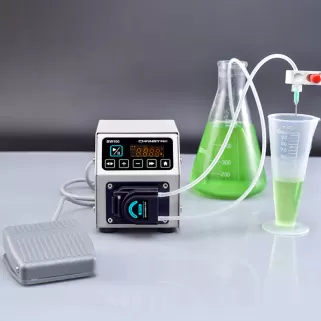
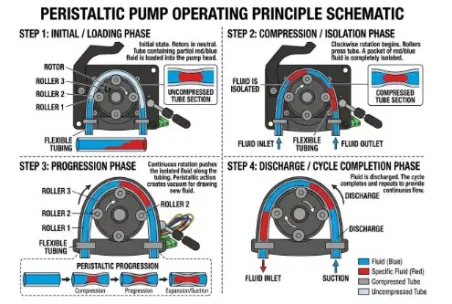
This type of pump uses rotating rollers to compress flexible tubing. The motion pushes liquid forward through the tube.
The fluid remains inside the tubing and never touches the pump housing or mechanical components.
For viscous liquids like syrup, this design provides several advantages:
Pump Configuration
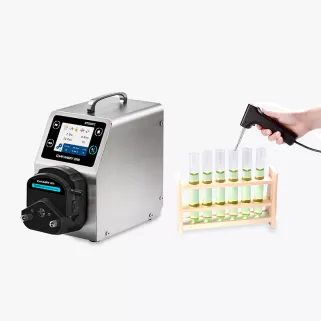
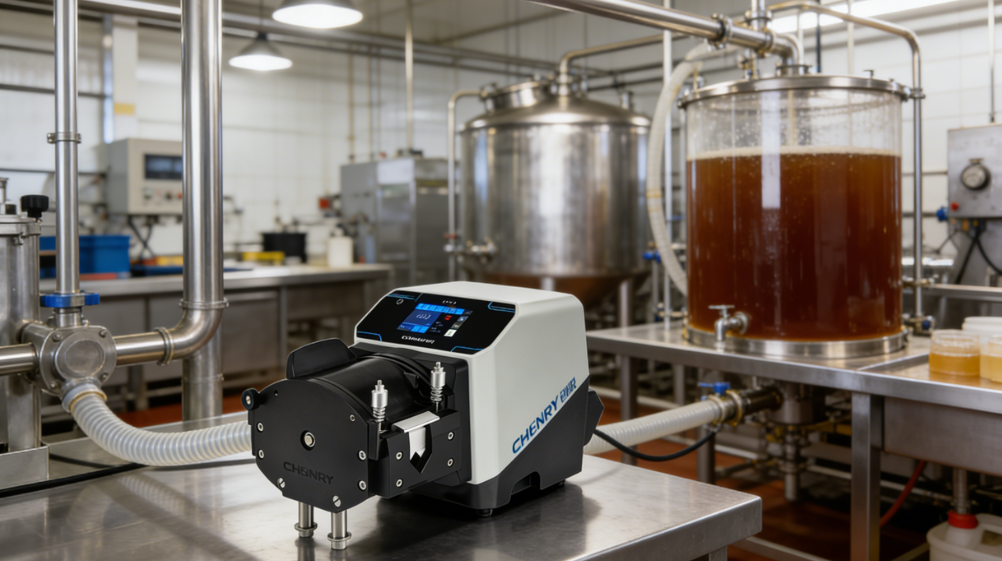
The selected Peristaltic pump for transferring syrup was installed between the mixing tank and the dosing unit.
Pump Specifications
| Parameter | Value |
|---|
| Maximum flow rate | 40 L/min |
| Operating pressure | Up to 4 bar |
| Tube material | Food-grade silicone |
| Motor | Variable speed drive |
| Tube inner diameter | 25 mm |
| Operating temperature | Up to 80°C |
Food-grade silicone tubing was selected because it provides excellent flexibility, chemical resistance, and compliance with food safety regulations.
How the Pump Works in This Application
The pump contains a rotor with multiple rollers. As the rotor rotates, the rollers compress the flexible tube.
This creates three stages of fluid movement:
Compression – The roller squeezes the tube, trapping syrup inside.
Transfer – The roller pushes the trapped liquid forward.
Recovery – The tube returns to its original shape and draws in more syrup.
This continuous motion creates a smooth and controlled flow.
Because the syrup only touches the tube, cleaning becomes easier and hygiene improves.
Results After Installation
The manufacturer monitored system performance for three months after installation.
The results showed significant improvements across several key production metrics.
1. Stable Syrup Flow
The peristaltic pump delivered a consistent flow rate even with high viscosity syrup.
Operators were able to adjust the pump speed to match the dosing system.
Measured performance improvements:
Flow accuracy improved to ±1%
Syrup dosing variation reduced by 80%
Product consistency significantly improved
This helped the manufacturer maintain stable beverage flavor across batches.
2. Reduced Cleaning Time
The previous pump required full disassembly for cleaning.
With the new system, operators simply replace the tubing when necessary.
Updated maintenance data:
Tube replacement time: less than 5 minutes
Cleaning downtime reduced by 80%
No internal pump cleaning required
This allowed the production line to run longer without interruption.
3. Lower Maintenance Costs
Peristaltic pumps have fewer components that contact the fluid.
The tubing is the main wear part, and replacement is simple.
Maintenance records showed:
This helped the manufacturer reduce operational expenses.
4. Improved Food Safety
Because syrup flows only through the tubing, contamination risk is greatly reduced.
The new system provided several hygiene benefits:
No metal contact with syrup
Food-grade tubing materials
Easy sanitation procedures
The factory later passed a food safety audit with improved hygiene scores.
Performance Comparison
| Factor | Previous Pump | Peristaltic Pump |
|---|
| Flow stability | Moderate | Excellent |
| Cleaning time | 45–60 min | 5 min |
| Maintenance frequency | Every 2 weeks | Every 2 months |
| Contamination risk | Medium | Very low |
| Production downtime | High | Low |
These improvements helped the manufacturer increase production efficiency and product quality.
Additional Advantages Observed
Beyond the initial goals, the company noticed other operational benefits.
Gentle Syrup Handling
Peristaltic pumps create low shear stress. This protects sensitive ingredients such as flavor compounds and fruit extracts.
Dry Running Capability
Unlike many pumps, peristaltic pumps can run dry without damage. This provides extra protection during tank changeovers.
Easy Flow Adjustment
Operators can adjust flow simply by changing motor speed.
Industry Applications for Syrup Transfer
This case reflects a common trend across several industries.
Peristaltic pumps are now widely used for viscous liquid transfer in:
Beverage syrup production
Chocolate and dessert sauces
Honey and sugar solutions
Pharmaceutical syrups
Flavoring concentrate dosing
These applications benefit from hygienic transfer and precise flow control.
Choosing the Right Pump Supplier
Selecting the correct pump model is essential for achieving stable performance. Factors such as flow rate, tubing material, pressure, and liquid viscosity must be carefully evaluated.
Working with an experienced pump manufacturer helps ensure the system matches the production process.
XXX focuses on designing and manufacturing peristaltic pump systems for industries including food processing, pharmaceuticals, laboratory applications, and industrial fluid handling. With extensive experience in viscous liquid transfer, the company provides reliable pump solutions that support accurate dosing, hygienic processing, and long-term operational stability.
If your production process requires a Peristaltic pump for transferring syrup, selecting the right equipment can significantly improve efficiency and reduce maintenance costs.
You can contact the engineering team to discuss your application and explore customized pump solutions for your production line.
FAQ: Peristaltic Pumps for Syrup Transfer
What makes a peristaltic pump suitable for syrup transfer?
A peristaltic pump works well with viscous liquids such as syrup because the fluid moves through a flexible tube that is compressed by rollers. This design maintains stable flow and prevents clogging, which often occurs with other pump types when handling thick liquids.
Is a peristaltic pump hygienic enough for food production?
Yes. In a peristaltic pump for transferring syrup, the liquid only contacts the tubing. The pump housing and mechanical parts do not touch the product. When food-grade tubing is used, the system meets hygiene requirements for food and beverage processing.
How viscous a liquid can a peristaltic pump handle?
Most industrial peristaltic pumps can handle liquids with viscosities ranging from 1 cP up to 20,000 cP, depending on the pump model and tubing size. This makes them suitable for syrups, sauces, honey, and other thick liquids.
How often does the tubing need replacement?
Tube life depends on pressure, speed, and operating hours. In many syrup transfer applications, tubing typically lasts 500–1,500 hours before replacement. Changing the tube usually takes only a few minutes.
Are peristaltic pumps better than centrifugal pumps for syrup?
For low-viscosity liquids like water, centrifugal pumps work well. However, when transferring thick liquids such as syrup, peristaltic pumps often perform better because they provide stable flow, handle higher viscosity, and simplify cleaning.
Conclusion
Handling viscous liquids like syrup can create serious challenges in manufacturing environments. Traditional pumps often struggle with flow stability, cleaning complexity, and hygiene requirements.
This case study demonstrates how a peristaltic pump improved syrup transfer efficiency in a beverage production line. The new system delivered stable flow, reduced downtime, simplified maintenance, and improved food safety.
For companies working with thick liquids, investing in the right pumping technology can play an important role in improving both production efficiency and product quality.