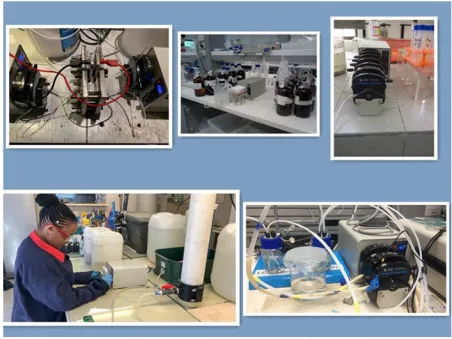
Water treatment systems rely on precise chemical control. A small dosing error can cause major problems. Too little chemical may lead to poor water quality. Too much chemical increases operating costs and can damage equipment.
Because of this, choosing the right pump is critical. Two common options are the chemical dosing pump for water treatment and the peristaltic pump for chemical dosing. Both pumps are widely used in industrial systems, municipal plants, and wastewater facilities.
But which one is better for your process?
This guide explains how each pump works, their advantages, and when they are the best choice. By the end, you will have a clear idea of which pump suits your application.
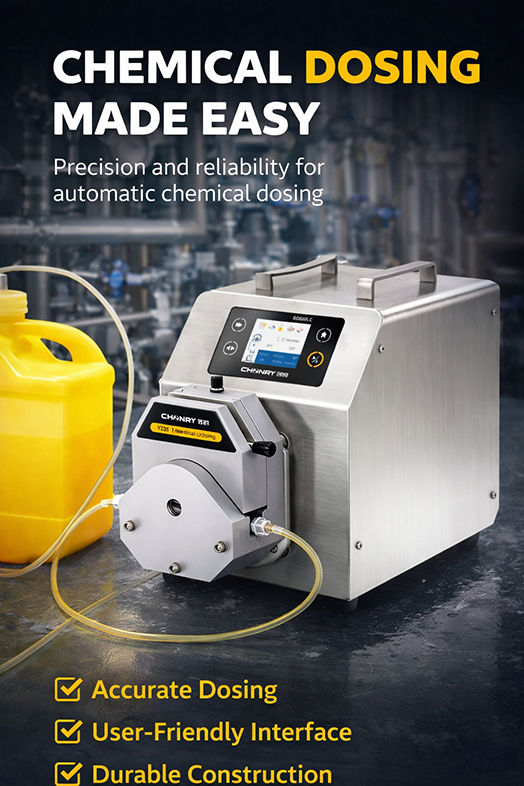
Why Accurate Chemical Dosing Matters in Water Treatment
In water treatment, chemicals help control water quality and protect equipment. These chemicals include:
Chlorine for disinfection
Sodium hypochlorite for sanitation
Coagulants like alum or ferric chloride
pH control agents such as sodium hydroxide
Anti-scaling chemicals
Most plants inject these chemicals in small but precise quantities. For example, a municipal plant treating 10,000 cubic meters of water per day may dose only 5–20 mg/L of chlorine. Even a small error can affect thousands of liters of water.
A reliable pump ensures:
This is why selecting the correct pump type is essential.
What Is a Chemical Dosing Pump?
A chemical dosing pump for water treatment is a pump designed to inject precise amounts of liquid chemicals into a system.
These pumps are often used in:
Drinking water treatment plants
Wastewater treatment facilities
Cooling tower systems
Boiler water treatment
Industrial chemical processing
Most chemical dosing pumps operate using a diaphragm or piston mechanism. The pump moves a fixed amount of fluid with each stroke, ensuring accurate delivery.
Key Features
Typical features include:
For example, a dosing pump may deliver 0.5–500 liters per hour, depending on the model.
Advantages
Chemical dosing pumps offer several benefits:
High accuracy
Many models achieve ±1% dosing accuracy, which is ideal for controlled chemical injection.
Strong pressure capability
These pumps can operate at pressures up to 10–20 bar, making them suitable for pressurized pipelines.
Automation compatibility
They can connect with PLC systems and sensors for automated dosing.
Limitations
However, they may not perform well with certain fluids. Some limitations include:
Sensitive to solids or abrasive particles
Requires regular maintenance for valves and diaphragms
Not ideal for highly viscous materials
What Is a Peristaltic Pump for Chemical Dosing?
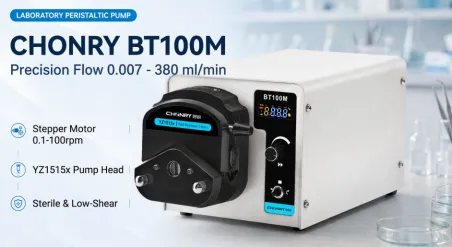
A peristaltic pump for chemical dosing works in a very different way.
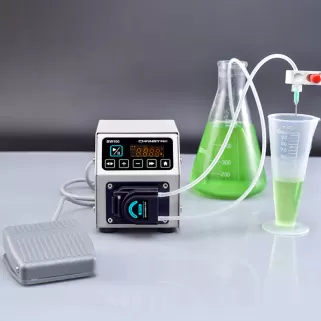
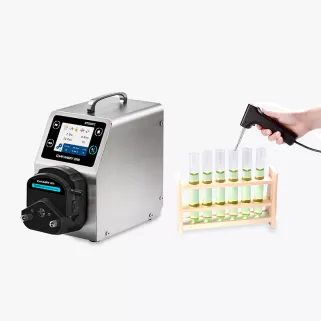
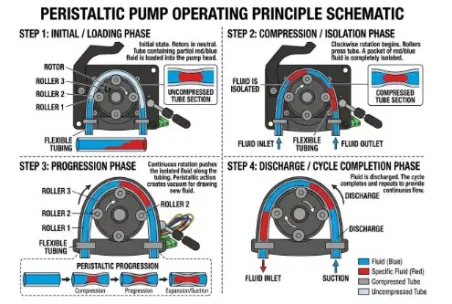
Instead of pushing fluid with a diaphragm or piston, the pump uses rollers to compress a flexible tube. The rollers move along the tube and push the fluid forward.
This motion is similar to how food moves through the human digestive system.
Key Features
Typical characteristics include:
Because the fluid stays inside the tube, the pump components do not touch the chemicals directly.
Advantages
Peristaltic pumps offer several strong advantages.
Handles aggressive chemicals
Since the fluid only touches the tube, it can safely pump corrosive liquids like acids or oxidizers.
Excellent for abrasive fluids
They are often used as a pump for abrasive slurry, such as lime slurry, sludge, or polymer mixtures.
Low contamination risk
The closed tube system prevents contamination between fluid and mechanical parts.
Easy maintenance
Changing a tube often takes only 5–10 minutes, reducing downtime.
Limitations
Despite their advantages, peristaltic pumps also have some limits:
Lower pressure capability than diaphragm pumps
Tubes require periodic replacement
Flow pulsation can occur at low speeds
Chemical Dosing Pump vs Peristaltic Pump: Key Differences
Understanding the differences helps engineers choose the right solution.
1. Pumping Mechanism
Chemical dosing pumps use a diaphragm or piston stroke to move liquid.
Peristaltic pumps use roller compression on flexible tubing.
This difference affects maintenance and fluid compatibility.
2. Chemical Compatibility
Both pump types handle chemicals well. However, the approach differs.
Chemical dosing pumps rely on materials like PTFE, PVDF, or stainless steel for chemical resistance.
Peristaltic pumps isolate the fluid inside the tube. Only the tubing material must resist the chemical.
This makes them suitable for very aggressive chemicals.
3. Ability to Handle Abrasive Fluids
A key advantage of peristaltic technology is solid handling.
For example:
Lime slurry
Activated carbon slurry
Polymer solutions
Wastewater sludge
These fluids can damage valves and diaphragms. A pump for abrasive slurry is often a peristaltic pump because it can move particles without clogging.
4. Pressure Capability
Chemical dosing pumps usually handle higher pressure systems.
Typical pressure ranges:
If the injection point has high pressure, a dosing pump may be the better option.
5. Maintenance Requirements
Maintenance affects operating cost.
Chemical dosing pumps may require:
Valve replacement
Diaphragm inspection
Calibration checks
Peristaltic pumps mainly require tube replacement, which is simple and fast.
6. Dosing Accuracy
Both pumps offer good accuracy.
Typical ranges:
For highly precise chemical control, diaphragm dosing pumps often perform slightly better.
Common Applications in Water Treatment
Both pump types appear in many water treatment systems.
Chemical Dosing Pump Applications
These pumps are widely used for:
For example, a cooling tower system may require 10 L/h sodium hypochlorite injection. A dosing pump can deliver stable flow under pressure.
Peristaltic Pump Applications
Peristaltic pumps are ideal for:
Wastewater plants often use them when solids are present.
For instance, polymer solutions used in sludge dewatering may contain particles that clog standard dosing pumps. A peristaltic design handles this easily.
How to Choose the Right Pump
When selecting a pump for water treatment, engineers usually consider several factors.
1. Fluid Type
Ask these questions:
If solids are present, a pump for abrasive slurry may be the best choice.
2. Flow Rate
Flow requirements vary widely.
Small systems may need 0.1 L/h, while large industrial plants may require hundreds of liters per hour.
Choose a pump that operates efficiently within the required range.
3. System Pressure
If the injection point has high pressure, a traditional chemical dosing pump for water treatment may be more suitable.
4. Maintenance Preferences
Facilities with limited maintenance staff may prefer simpler equipment.
Peristaltic pumps reduce maintenance complexity.
5. Operating Cost
Pump cost includes:
Energy consumption
Spare parts
Maintenance labor
Downtime risk
A pump with slightly higher purchase cost may reduce long-term operating expenses.
Future Trends in Water Treatment Pump Technology
As water treatment demand grows, pump technology continues to evolve.
Several trends are shaping the industry.
Smart dosing systems
Modern pumps integrate with sensors and control systems. This allows automatic adjustment based on water quality.
Improved materials
Advanced polymers and corrosion-resistant materials extend pump life.
Energy efficiency
Manufacturers are designing pumps that reduce energy consumption while maintaining accuracy.
These innovations help treatment plants reduce operating costs and improve reliability.
Conclusion
Both pump types play an important role in water treatment.
A chemical dosing pump for water treatment provides high accuracy and strong pressure capability. It works well in precise chemical injection systems.
A peristaltic pump for chemical dosing offers simple maintenance and excellent performance with abrasive or viscous fluids. It is often the preferred pump for abrasive slurry and solid-containing chemicals.
The best choice depends on your fluid type, system pressure, dosing accuracy, and maintenance needs.
Selecting the right pump helps improve water quality, reduce chemical waste, and ensure stable system operation.
Looking for Reliable Chemical Dosing Pump Solutions?
Choosing the right pump is easier when you work with an experienced manufacturer.
Our factory specializes in chemical dosing pumps, peristaltic pumps for chemical dosing, and pumps designed for abrasive slurry applications. These pumps are widely used in water treatment plants, wastewater systems, and industrial chemical processes.
We focus on stable performance, corrosion-resistant materials, and reliable dosing accuracy. Our team can also help recommend the right pump model based on your flow rate, pressure, and chemical type.
If you are planning a new water treatment system or upgrading an existing one, feel free to contact us for technical advice or a quotation. Our engineers are ready to help you find the most suitable pump solution for your project.