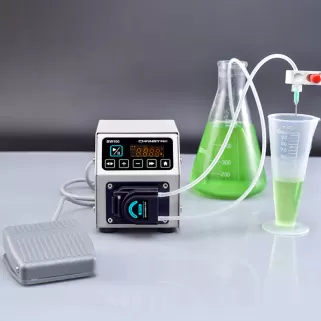
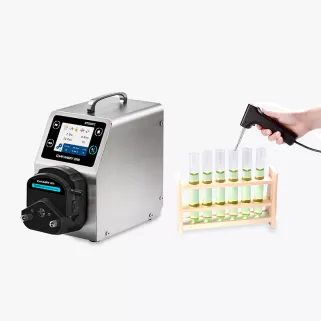
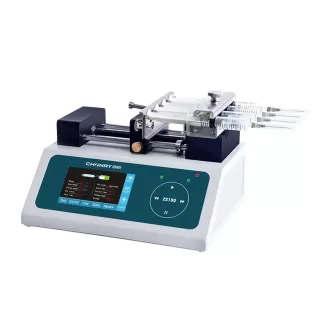
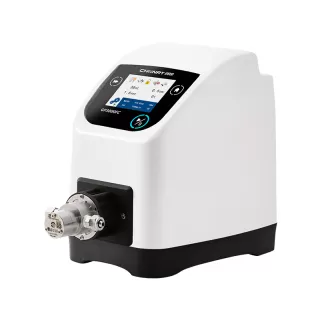
In industrial, medical, and laboratory fluid handling, integrating a foot pedal with a peristaltic pump is one of the most effective ways to free up an operator’s hands, boost dispensing efficiency, and maintain a sterile environment.
While many peristaltic pump manufacturers list "foot switch support" as a line item on a datasheet, they rarely explain which switching modes, electrical specifications, or wiring configurations actually fit your specific production line.
1. Operating Modes, Switch Types, and Selection Guide
Choosing the right combination of switching modes and electrical configurations is critical to preventing operator fatigue and ensuring dispensing precision.
Common Operating Modes & Applications
· Momentary Mode (Non-Latching):
How it works: The pump runs only while the pedal is actively pressed and stops immediately when released.
Best For: Sterile dispensing, micro-dosing, and manual container filling. This gives the operator millisecond-level manual control to prevent overfills.
· Latching Mode (Maintain / Alternate Action):
How it works: Pressing the pedal once turns the pump on; pressing it a second time turns it off.
Best For: High-volume bulk fluid transfer or waste-carboy aspiration. This prevents operator leg fatigue during long-run cycles.
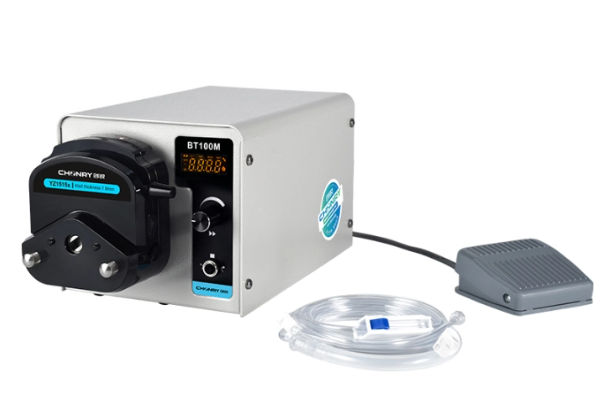
Switch Types & Electrical Configurations
The internal contact structure of your foot switch dictates its lifespan and system integration options:
·Signal Transmission: Wired vs. Wireless
Wired Switches: The industry gold standard for medical and industrial settings. They offer zero-latency, immunity to Electromagnetic Interference (EMI), and require no batteries, making them highly compliant with strict factory safety protocols.
Wireless Switches (Bluetooth/2.4GHz): Best suited for cramped, sterile laboratory hoods where cord clutter poses a contamination risk. However, they introduce a minor signal latency ($10\text{ ms} \sim 50\text{ ms}$) and require strict battery-management protocols.
Control Voltage & Safety Isolation (US Standards)
In North American industrial and clinical environments, safety is paramount:
⚠️ Safety Redline: Always use low-voltage DC (5V to 24V DC) control signals for foot pedals.
Avoid routing 120VAC line voltage directly through a floor-mounted foot pedal. Because laboratory and production floors are prone to liquid spills, low-voltage (Class 2) circuits eliminate electrocution hazards, bypass the need for costly explosion-proof conduit, and ensure OSHA compliance.
2. Installation, Wiring, and Electrical Setup
Improper wiring can lead to contact bounce, signal interference, or even voltage spikes that burn out your peristaltic pump’s PLC controller board.
Practical Wiring & Isolation Diagrams
Below are the two most common methods for interfacing a foot pedal with a peristaltic pump’s I/O port.
Option A: Direct Low-Voltage Digital Connection (For pumps with built-in optoisolation)
Plaintext
[ Peristaltic Pump I/O Terminal ]
+5V/24V Out (Pin 1) -------> [Foot Switch COM]
Digital Input (Pin 2) <----- [Foot Switch NO]
GND (Pin 3)
Option B: Relay/Optocoupler Isolation (Recommended for long cables or high-noise environments)
If your pedal cable is longer than 10 feet or runs parallel to heavy machinery power lines, use an external relay to isolate the pump’s sensitive logic board.
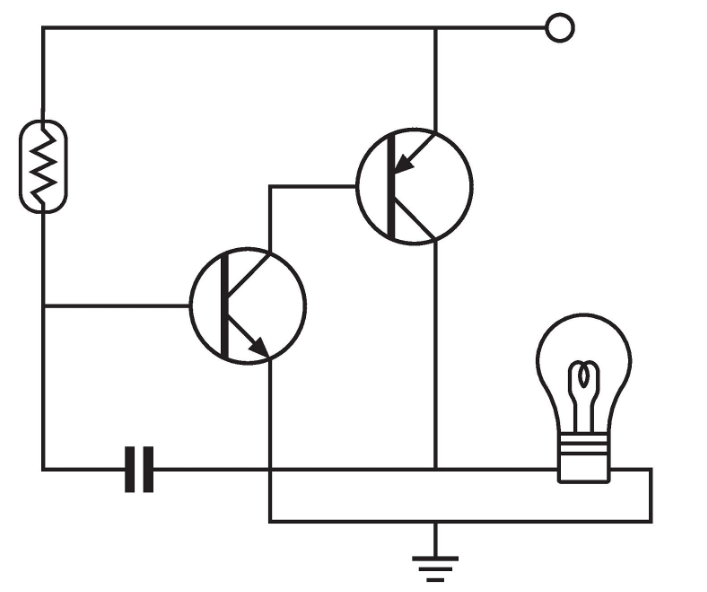
Plaintext
[ Ext. 24VDC Power ] -----------> [Foot Switch COM]
[ Foot Switch NO ] -------------> [DC Relay Coil +]
[ Ext. Power GND ] -------------> [DC Relay Coil -]
│
[ Relay NO Dry Contact ] ---> Connects to Pump Start/Stop Input
Eliminating Contact Bounce (Debouncing)
Mechanical switches do not close cleanly; their metal contacts bounce microscopically for $5\text{ ms} \sim 20\text{ ms}$ upon impact.
The Issue: A high-speed pump controller may misinterpret this bounce as a rapid sequence of start/stop commands, leading to inaccurate dispensing volumes and premature motor wear.
The Solution: Implement a hardware RC filter (a $0.1\,\mu\text{F}$ capacitor in parallel with a resistor across the signal line) or configure a software debounce delay of $30\text{ ms}$ in your PLC/controller settings to ignore these rapid micro-transitional spikes.
National Electrical Code (NEC) & US Compliance Notes
Cable Rating: Foot switch cables subject to floor wear must use heavy-duty, water- and oil-resistant jackets rated SJTO or SOW (typically 18 AWG copper conductors).
Grounding: If a metal-clad foot switch housing is used, it must be bonded to the equipment grounding conductor (Green Wire) per NEC Article 250.
Overcurrent Protection: Protect the control loop with a fast-acting fuse (typically 0.5A to 1A) positioned at the source of the control voltage transformer's secondary side.
IP Ratings for Wet Environments: For laboratory washdowns or surgical suites (complying with UL 60601-1), utilize a foot switch with a minimum IPX8 submersion rating.
3. Flow Control, Performance, and Tubing Compatibility
Beyond simple on/off switching, advanced setups utilize proportional foot pedals to dynamically control flow rate.
Proportional (Variable Speed) Analog Mapping
A proportional foot pedal behaves like a gas pedal, utilizing an internal potentiometer or Hall effect sensor to output a $0\sim5\text{V}$, $0\sim10\text{V}$, or $4\sim20\text{mA}$ signal. The pump drive maps this analog input linearly to its motor speed ($0\sim100\%$ PWM). This allows operators to slow down the flow rate near the neck of a container for highly precise, spill-free manual top-offs.
Tubing Inner Diameter (I.D.) & Flow Rate Reference Table
To help you size your system, the table below lists typical flow rates for standard pump head configurations running at variable speeds:
Step-by-Step Volume Calibration Protocol
Even with an identical foot pedal press duration, changes in tubing wear and liquid viscosity will affect output volume over time. Follow this calibration procedure daily:
Break-In: Run the pump with your selected tubing for 5 minutes to allow the elastomeric material to reach mechanical and thermal equilibrium.
Test Run: Set your controller to run for a fixed pedal trigger duration (e.g., exactly 5.0 seconds).
Measure: Dispense the fluid onto an analytical scale (mass-based calibration is significantly more accurate than visual volume calibration). Convert mass to volume based on fluid density:
$$\text{Volume (mL)} = \frac{\text{Mass (g)}}{\text{Density (g/mL)}}$$
Calculate Correction:
$$\text{Calibration Factor} = \frac{\text{Target Volume}}{\text{Actual Measured Volume}}$$
Input this calibration factor into your pump controller. Recalibrate every 4 to 8 hours of continuous operation, or immediately upon changing tubing lines.
Selecting the Right Tubing Material & Sterilization Method
Choosing a tubing material that matches your chemical profile and sterilization needs is critical to avoiding catastrophic tubing failure during production runs.
Request a Quote or Demo
Tell us your application requirements, and our engineering team will recommend the right configuration.
Available Support
Fast Quotation (24–48 hours)
Sample Evaluation Program
Video or Phone Consultation
Technical Documentation Package
FAQ
What are the main alternatives to peristaltic pumps for dosing, and which is best for sterile fluids?
Several pump technologies are commonly used for dosing applications, each with different advantages:
Diaphragm Pumps – Suitable for chemical dosing and high-pressure applications, but they contain wetted components that require regular maintenance.
Gear Pumps – Provide smooth and precise flow for viscous fluids, but are not ideal for shear-sensitive or sterile media.
Piston Pumps – Offer excellent accuracy and high pressure capability, though seals and valves can wear over time.
Progressive Cavity Pumps – Effective for high-viscosity products and slurries, but typically require more maintenance.
Peristaltic Pumps – The fluid only contacts the tubing, minimizing contamination risk and simplifying cleaning and sterilization.
For sterile fluids, peristaltic pumps are often the preferred choice because the product remains completely isolated within the tubing. This design reduces cross-contamination, supports single-use tubing systems, and simplifies compliance with pharmaceutical and biotechnology hygiene requirements.
What is the difference between momentary and latching foot pedals, and when should I use each with a peristaltic pump?
Foot pedals are commonly used to provide hands-free control of a peristaltic pump. The two most common types are:
Momentary Foot Pedal
The pump runs only while the pedal is pressed.
Releasing the pedal immediately stops the operation.
Provides precise control for dispensing and filling tasks.
Ideal for laboratory work, manual dosing, and applications requiring frequent start/stop operation.
Recommended for:
Bottle filling
Sample dispensing
Laboratory dosing
Small-batch production
Latching Foot Pedal
A single press starts the pump.
The pump continues running until the pedal is pressed again or stopped through the controller.
Reduces operator fatigue during long dispensing cycles.
Suitable for continuous transfer processes.
Recommended for:
Continuous fluid transfer
Production line feeding
Long-duration pumping operations
Applications where hands-free continuous operation is required
Many advanced peristaltic pumps support both operating modes, allowing users to select the control method that best matches their workflow and production requirements.