Imagine this: Your production line urgently needs a fluid transfer device. You spend a week comparing brands and finally order a peristaltic pump. When it arrives, the installation manual is full of technical jargon that you can't
understand at all. You call the manufacturer, and they say, "We don't handle that." You have to pay someone to install it. Less than three months later, the peristaltic pump malfunctions, and the manufacturer says, "That model
is no longer in production."
This dilemma of "buying a peristaltic pump is easy, but using it is difficult" plagues many purchasing personnel and business owners. Today, we'll discuss how to find a reliable supplier that can truly provide one-stop service
from procurement to installation.
Before purchasing, you need to think clearly about three things:
1. Do you really understand your needs?
Many people don't carefully analyze their actual needs before buying a peristaltic pump. As a result, the equipment they buy is either overkill or inadequate.
Before contacting any supplier, ask yourself three questions:
What liquid is being transported? Is it clean water, chemical raw materials, food slurry, or a liquid containing particles?
What flow rate is required? How many liters or milliliters per minute do you need to transport?
What is the working environment like? Temperature, humidity, and the presence of corrosive gases?
For example: A food factory needs to transport chocolate sauce. Chocolate sauce has high viscosity and is temperature sensitive, so ordinary pumps can't handle it. But if you specify your needs in advance,
a professional supplier will recommend a peristaltic pump model suitable for high-viscosity fluids.
2.Price isn't the only criterion.
The saying "you get what you pay for" is especially true in the industrial equipment sector. Let's look at some data:
Comparison Items: Low-priced pumps vs. Quality pumps
Average lifespan: 1-2 years vs. 5-8 years
Failure rate: 15%-20% vs. 2%-5%
After-sales response time: 3-7 days vs. within 24 hours
Hose replacement frequency: Every 2-3 months vs. every 6-12 months
Let's do the math: A low-priced peristaltic pump costs $600, requires hose replacements 3 times in two years ($100 each time), and experiences 5 downtimes due to malfunctions ($350 loss each time).
Total cost = $600 + $100 + $500 = $1200.
A quality peristaltic pump costs $800, requires hose replacements 4 times in five years ($50 each time), and experiences 1 downtime due to malfunction. Total cost = $800 + $50 = $850.
Quality pumps not only have a lower total cost but also eliminate the hassle of troubleshooting.
How to determine if a supplier is reliable during the procurement process?
These five details are enough:
Detail 1: Does the supplier proactively inquire about your operating conditions?
A responsible salesperson won't immediately offer a quote. They will first understand your application scenario, including liquid properties, flow requirements, etc. If the supplier offers a quote without asking any
questions, it's advisable to consider it cautiously.
Detail 2: Can they provide detailed selection options?
A reliable supplier will provide 2-3 options based on your needs, explaining the advantages and disadvantages of each.
Detail 3: Do they provide samples or trial services?
For uncertain selections, good peristaltic pump manufacturers will provide samples for testing, greatly reducing procurement risks.
Detail 4: Are the contract terms clear?
A formal contract should clearly state: product specifications, quantity, price, delivery time, warranty period, etc. Vague terms are often the root of disputes.
Detail 5: Are there real customers you can contact?
Don't just look at the "positive review screenshots" on the official website. Asking if they can provide contact information for customers in the same industry, and then making a call to ask about their user experience,
is more effective than anything else.
3. Examine the Manufacturer's "Soft Power"
Besides the product itself, you also need to pay attention to the following aspects of the manufacturer:
Technical Team Size: Are there professional engineers to provide selection advice?
Inventory Status: Are commonly used models in stock? What is the delivery cycle?
After-Sales Policy: How long is the warranty period? Does the manufacturer provide on-site service?
Customer Cases: Do they have successful cooperation experience with companies in the same industry?
Installation and Debugging: Avoid These Pitfalls
Common Installation Mistakes Ranking
**Number One:** Improper Piping Connections
Many people connect the inlet and outlet pipes incorrectly when installing a peristaltic pump, or the pipe bending radius is too small. Correct practice: Keep the inlet pipe as short and straight as possible, and avoid
sharp bends in the outlet pipe.
**Number Two:** Incorrect Pump Head Installation Position
The pump head should be installed horizontally with the inlet facing downwards. Incorrect installation angles will cause uneven wear on the hose, shortening the peristaltic pump's lifespan.
**Number Three:** Neglecting Grounding Protection
Industrial electrical environments are complex, and proper grounding protection is essential. Otherwise, static electricity buildup may damage the equipment or even cause safety accidents.
**Number Four:** Hose Installation Too Tight or Too Loose
Too tight a hose will accelerate wear; too loose a hose will affect flow accuracy. Correct tightness: Press the hose by hand; it should feel slightly elastic.
Post-Installation Debugging Steps
**No-Load Test:** Without connecting any liquid, run the pump for 5 minutes to check for smooth operation.
**Low-Pressure Test:** Connect clean water and run at low speed for 10 minutes to check for leaks.
Load test: Gradually increase the rotation speed and run for 30 minutes, recording the flow data.
Continuous operation test: Simulate actual working conditions, run continuously for 2 hours, and observe the temperature and noise levels.
Why Choose a Professional Supplier?
Buying a pump isn't difficult; the challenge lies in the entire process, from selection and installation to ongoing maintenance. A professional peristaltic pump manufacturer can provide you with the following value:
Free Selection Consultation: Engineers recommend the most suitable model based on your working conditions.
Customized Services: Adjusting pump parameters and configurations to meet specific needs.
Installation Guidance: Providing detailed installation instructions; remote video guidance is available when necessary.
After-Sales Guarantee: 24-hour response time; free repair or replacement within the warranty period.
Spare Parts Supply: Maintaining a long-term stock of commonly used hoses, pump heads, and other accessories for immediate shipment.
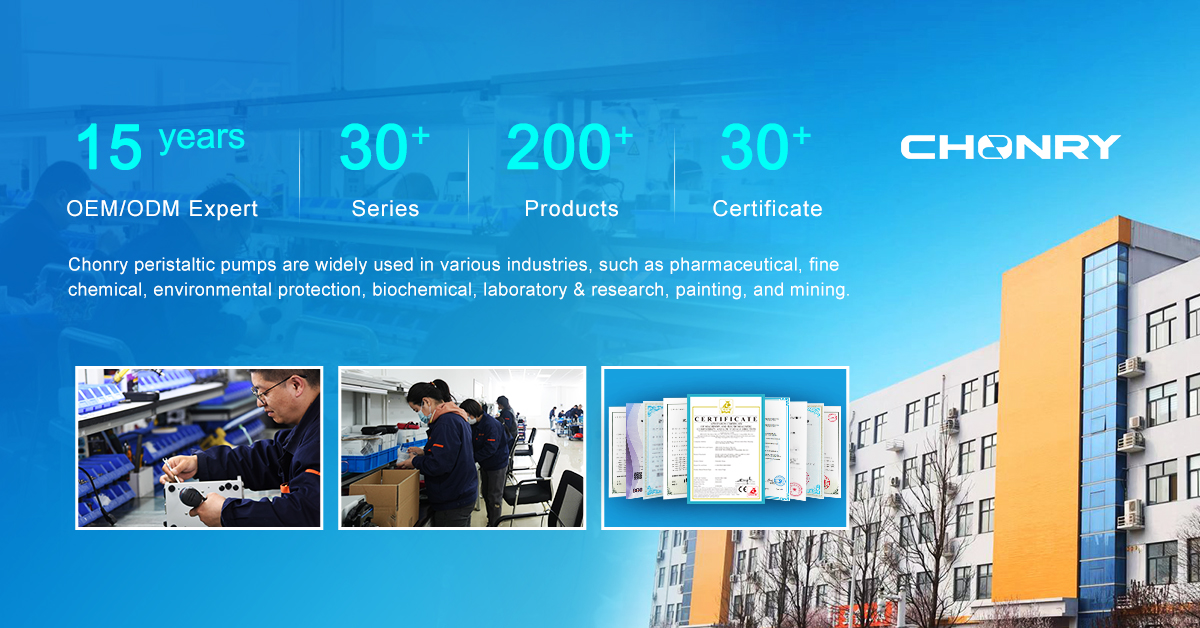
If you're looking for a reliable supplier, we are the partner you need. With over 10 years of industry experience, we have served hundreds of companies in the pharmaceutical, food, and chemical industries.
Our service process is simple:
Tell us your needs
Our engineers will provide a free selection solution
Place your order after confirmation, with delivery within 7-15 business days
We provide detailed installation guidance to ensure smooth production
We respond to after-sales issues within 24 hours
Contact us now for a free selection solution! Click the "Online Consultation" button in the lower right corner of the website, and a professional engineer will provide you with one-on-one service.
From procurement to installation, choosing a reliable supplier can save you a significant amount of time and money. Remember three key points: clearly define your needs before procurement, examine details during
procurement, and follow standardized procedures during installation. By doing these three things, your fluid transfer project can proceed smoothly.
Don't let "buying a pump is easy, but using it is difficult" become your problem. Choose a trustworthy partner and let professionals do what they do best.




![Best Peristaltic Pump for Water Treatment Chemical Dosing [2026 Guide]](/data/watermark/20260902/6a97edf4bde65452_361.webp "Best Peristaltic Pump for Water Treatment Chemical Dosing [2026 Guide]")